Sunday, December 25, 2016

12/22 Lauren Mitchell

In class today, we were supposed to do the pre-production page for our final podcasts.  However, Mr. Rivers announced to the class that we will not be podcasting until after the Christmas break is over.  In replace of the original class plans, we took an online test.  This was a diagnostic test that would show Mr. Rivers how well my classmates and I knew our grammar, punctuation, and other various skills.  This test was not like anything else we have taken, as it asked personal questions in the beginning of the test that allowed for our personal information to be given.  All of the questions were based off of our own personal interests which made the test a lot more fun.
After we completed this assignment, we started watching the Christmas Party episode of "The Office".  This was very much appreciated, as everyone loves that show.  In order to keep it "english class related", as Mr. Rivers said, we had to keep in mind some of the reoccurring themes that took place in the episode.  Lots of laughs later, at the end of class, we stopped about halfway through the episode.  We would continue watching it tomorrow.  This class period was not only productive, but also got everyone in the Christmas spirit.


Thursday, December 22, 2016

12/22 - In Which Jabba The Hutt Does Yoga - Sarah H

A miracle occurred in class today: Mr. Rivers announced that we will podcast after the break instead of this week. This came as a relief to everyone because we each probably had at least four tests just today, probably five. We will instead be podcasting the first week of January.
Mr. Rivers introduced us to NoRedInk, a website created to help us test and practice our grammar skills. The website asks you about your interests and "tailors" the sentences to those interests. However, this made for some interesting sentences. For example (this picture was taken before the sentence was corrected):
Although it made for some weird sentences, it wasn't bad. Apparently we did pretty well, save for the active/passive voice category. According to Rivers, 2% of people in both classes were proficient in active and passive voice. But its ok, we'll work on it.

With the last part of class, we watched a Christmas episode of The Office. I have never seen The Office before, but I looked it up and i think it's Christmas Party S2 Ep10. We are going to finish and  analyze theme in the episode tomorrow.

Wednesday, December 21, 2016

December 21, 2016 - Michael Mancuso


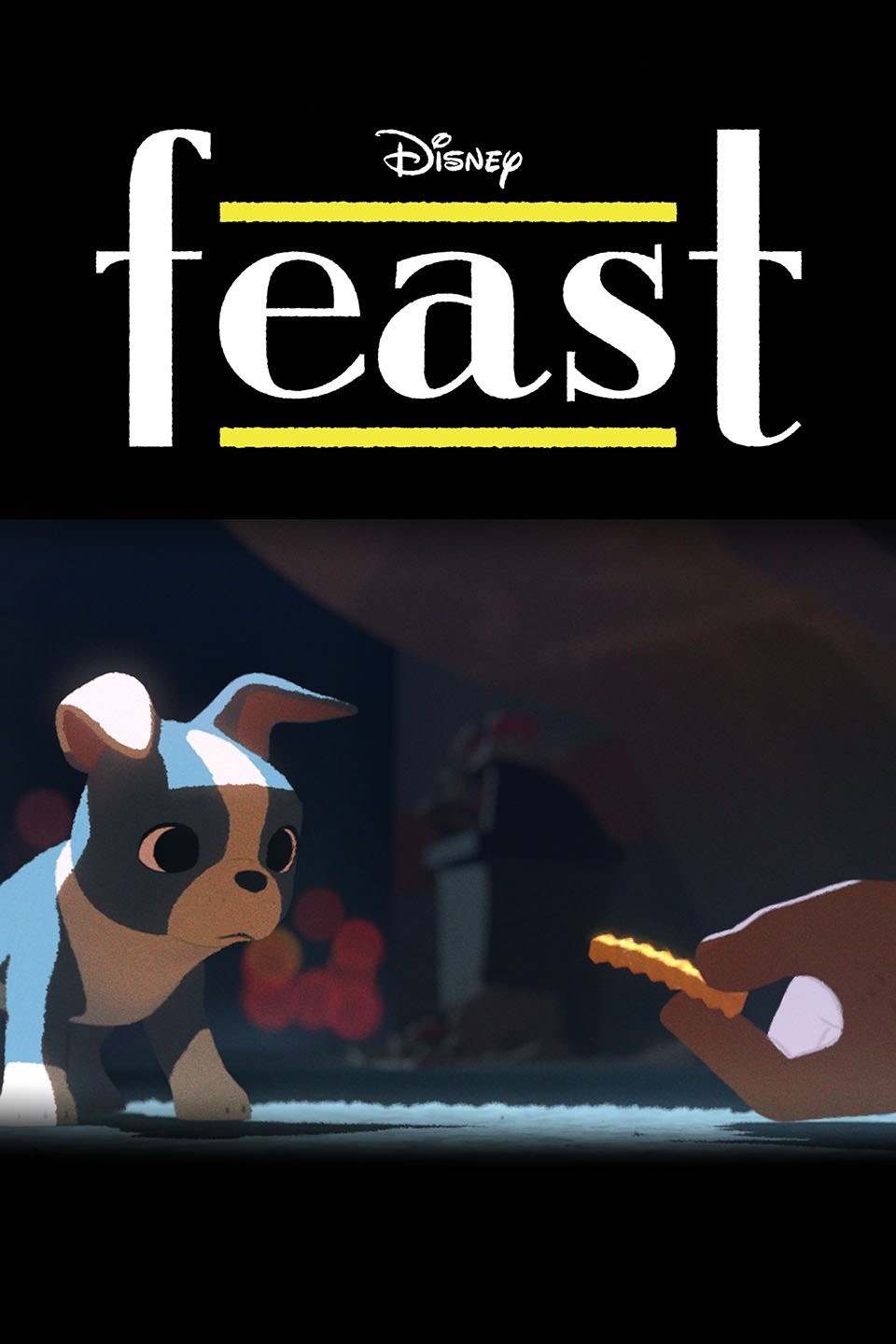
As the days leading up to Christmas break wind down, Mr. Rivers' class keeps chugging along. Today, we continued our class' critical review of the Disney short film "Feast." Specifically, we began to analyze some of the countless themes involved within the film. First, we chose from the list of potential themes pertaining to the many topics we've compiled over the past two days. Having chosen a particular theme, each desk group then analyzed their theme. Along with my group, consisting of Lauren Mitchell, Annie Monroe, Michael Loh, and myself, we analyzed a theme proposed by Kirk Brown. By working together to formulate scholarly sentences, we developed short paragraphs about the theme we selected, keeping the context of the review in mind.

After carefully crafting our desk group's theme paragraph, Mr. Rivers asked us to read through the other groups' paragraphs in an effort to choose the three best paragraphs. After taking a vote on the three best, groups B, C, and D were found to be the overall winners. So, having won the miniature competition, each of these three groups' won the honor of having their paragraphs featured in the class' final review of "Feast." While my group's paragraph was unfortunately not selected, I still learned a bit more about developing scholarly, and analytical paragraphs in a clear and specific manner. Overall, I felt that today was a quite productive day.


Tuesday, December 20, 2016

12/20 Michael Loh- It too darn cold

As I entered the classroom today, the first thing that I noticed was that it was really cold. It was especially rough for me because I was coming from a super toasty homeroom. What's super annoying is all this cold weather and no snow days.it angers me a lot. I think its a punishment from the weather gods or something like that. They are probably saying something like "You've already had like 4 senior skip days. You've had enough days off already". What's even worse is how they decide to give us huge amounts of snow on the weekends. So instead of doing my usual routine of nothing on the weekends, I'm not outside shoveling my super long driveway. Thanks nature gods.

Now when it comes to the actual class itself today, we continued working on our class review thing. Today we continued on with what made a good review and talked about theme. We revisited how theme was a claim based on topics in a text. I remember Mista Rivas s[ecifically sayin that theme transcends a story. I'm not sure why I wrote like that^ but whatever. We also went over that a theme was a claim. (C'mon kids. We gotta know this stuff). We applied all these things that we had been learning to the short film Feast. (BTW I wish my dog was a little more like Winston. I wis he was just a little more hyper *sigh). We used this one groups "questionable" (lol) arrangement of paragraphs for the structure of our review. We then tried to create some fat and juicy transitions to make our review awesome. Some groups created some solid transitions. I on the other hand did not *cries. That was basically our day in English.

Also I wanna add this funny video for anyone that might be struggling with any form of sadness. It's cold at the moment and I thought that we could laugh at this dumb guy jumping into a frozen lake. It's kinda old, and you've probably seen it before but... here you go.

https://www.youtube.com/watch?v=VBXKoZQwvDE

Monday, December 19, 2016

12/19/16 Connor Erickson

Today in Mr. Rivers' class we started class the best way to start any class, watching movies. Since period two had the fire drill yesterday, Mr. Rivers didn't want our class to be too far ahead so we watched two short films. The first short film we watched was called Day and Night, a 2010 short made by Pixar. This short film consisted of no dialogue but expressed many words just by showing instead of telling. It was about two characters, one showing the day time and the other showing the night time. Throughout the film we see the characters going back and forth about which character shows the better day of time and by the end they switch times so everyone is equal. After that short film we watched another one called, Paper man also an oscar winning film made by Disney. This short was about a man searching for the girl he met at the train station with paper planes. Again there is no use of dialogue but it does a great job at giving an interpretation of what the message should be. By the end of the film he finally finds his girl and both shorts end with a happy ending. After we had our fun of watching short films we got back to learning about transitions and how to strengthen a critical review.
Here are the notes we took today about what the critical review should consist of.
Goal: To develop transitions to strengthen the organization of a critical review
Always Consider Audience
  1. Deliberately Title Article
  2. Credit Relevant Artists
  3. Provide necessary context
  4. Summarize plot
  5. Evaluate content
  6. Evaluate meaning/theme (plant seed)
  7. Conclude

After we finished taking notes we then looked at the feast review that we've been working on the past few days and constructed this opening paragraph of a critical review from all of the groups mini work in the class.
“Feast”, a short film directed by Patrick Osborn, illustrates a tale about a dog named Winston. It focuses on his food habits, and how those habits are affected by his owner’s relationship with a waitress. The Oscar-winning animated short was produced for Big Hero 6. In just six minutes, the film transcends the boundaries of what it means to be a short film.


Chris Link

Today, the nineteenth of December, in the year two-thousand-sixteen, We started class by looking at the IWBAT objectives on the board. Mr. Rivers then announced to the class that he will be collecting Ready Player One books all week for the people that had not already turned theirs in on Friday. On a side note he recommended to anyone who lost or destroyed their book to simply buy a new one and bring it in instead of bringing money to pay for a new one.
Instead of immediately diving into a lesson plan as usual we watched the Pixar short film's Day and Night, and Paperman, so that the other class could catch up because they had a cut off period with the fire drill on Friday. Before watching these movies there was a short discussion on the origin of pixar short movies.
We shifted Gear again after watching these two films and turned our attention back to the document we began working on Friday. We briefly reviewed the formal expectations of a movie review. They are as follows:

Deliberately title article
Credit relevant artists
Provide necessary content
Summarize plot
Evaluate content
Evaluate meaning/theme
Conclude

Mr. Rivers then made an example paragraph that was focused on providing necessary background information. He asked the class for ideas for the formulation of this paragraph. It went as follows:

“Feast”, a short film directed by Patrick Osborn, illustrates a tale about a dog named Winston. It focuses on his food habits, and how those habits are affected by his owner’s relationship with a waitress. The Oscar-winning animated short was produced for Big Hero 6. In just six minutes, the film transcends the boundaries of what it means to be a short film.

Our last activity was to look back at the paragraphs we had made on Friday so that we could number them in order of relevance to the audience One group said the order should be A,E,C,B,D,F, wheras our group said it should be A,E,C,D,B,F.
Finally the class ended.

Short Film inks:
Paperman
https://www.youtube.com/watch?v=SIgs8EyQTdk
Day and Night
https://www.youtube.com/watch?v=JTBJobqIcBs

Sunday, December 18, 2016

12.16.16 - Kada Cernek

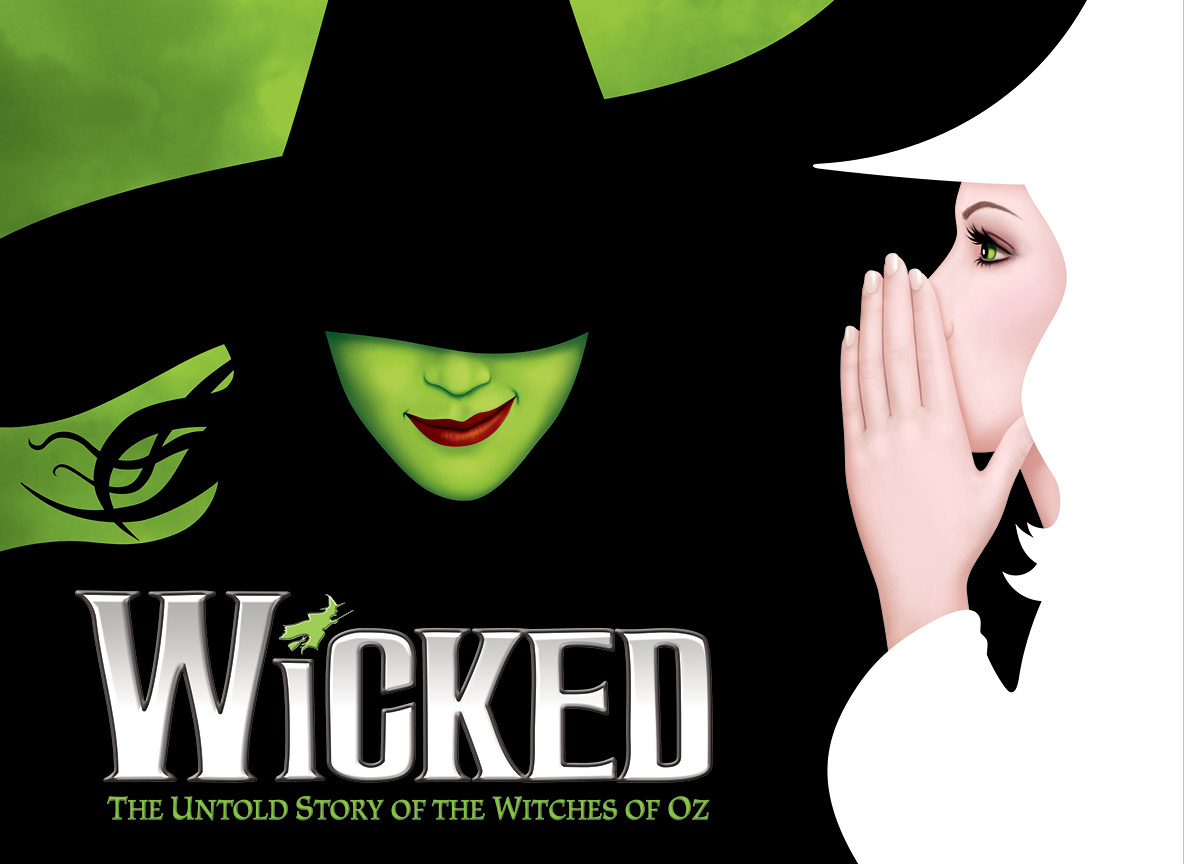
Today in class, we recorded our podcasts in our groups as we have been doing every Friday. Like usual, Mr. Rivers sets us on our way and everyone begins their work scrambling for quotes and evidence to support their podcast and plan in the best way possible. My podcast, A New Twist, with co-host Michelle Cella, this week focused on the novel Wicked and the movie Maleficent. We continued with our unifying idea of twisted Disney remakes and how directors make choices that affect these remakes. Our specific focus this week was the use of relationships in both the film and the novel to progress the plot. We also compared the relationships to each other and how they were similar. Like normal, we spent the first 20 minutes of class planning our pre production page and then we got to actually recording in the last 10-15 minutes. The rest of the groups in the class also recorded their podcasts during class!


Friday, December 16, 2016

12/16/16-- Jackie Dowd

Today in class was a podcast day! Everyone's favorite day of the week to hectically rush around and make sure they have enough quotes to get through a 10 minute podcast. My group consists of 5 members including myself. Luckily all participants came with great topics and questions to discuss. Our main focus over all four podcasts is how underdogs rise to the top. This week we analyzed and discussed how confidence leads to achievement. Our group worked well together to make some thoughtful questions in order to disuss the movie Rocky and the book Remember this Titan. All groups worked well all class in order to get their blogs done on time and well.

Nina Levatino- 12/16/16

Class today was particularly interesting. Blog days are always a bit hectic and rushed. We gathered with our groups and began our pre-production pages. Our group, as referred to as "Twistery Inc." was excited for this blog. The movie we chose was one of our favorites. "Shutter Island" has an incredible twist at the end that we could not wait to talk about. Also, in this third quarter of our book, we finally got to the "twist". Turns out, Amazing Amy is an Amazing psychopath. She's been alive the whole time. This was one of our most exciting podcasts filled with intelligent conversations and exciting revelations. We started our podcast off with one of my questions; "How are both the women in the film and the novel portrayed as mentally insane?" We discussed how Amy has a history of lying and absurd accusations which appointed to this new one. On the contrary, Deloris was completely normal. The only signs of trouble was when she described to her husband that she had "bugs in her brain". Michaela then brought up how both men where blamed for their wives falling off the rockers. These discussions lasted for most of the podcast, which finished at 10 minutes and 58 seconds. This was our groups personal record. We had a hard time ending such great conversation. We finished with three minutes to spare, the bell ringing upon our entrance to the classroom. There was a lot of energy today and we felt as though it was some of our best work.

Thursday, December 15, 2016

12/15/16: The Language Everybody Knows

    It is a common misconception that stories are to be simply told; they are a said and done deal, something which will linger in your mind for a couple of weeks at most and then slowly fade away, anything but a distant memory. "Feast" adequately disproves this, and does so in the most elegant way possible.

    In short, what if I told you that there was a language which every person in the world knew? What if there was a way to convey how you feel without the use of letters, words, or sentences? What if I told you that, since the moment you were born, you knew this language, and that it speaks to you in one of the most profound ways imaginable?

    The short film "Feast" is capable of tapping into the hearts of so many with minimal usage of the English language because of one simple principle: show, don't tell. Exposition is great filler, but the beauty of a short film is that it doesn't have the time to deal with such a ridiculous concept. Instead, it's much more efficient to convey the story through this, "other language," I mentioned earlier, and "Feast" does so with flying colors. To cut it short: "Feast" effectively uses body language in order to present an "implied story," of which is full of heart warming love and cuteness.

    What I wrote above is, in a nutshell, part of what we did today in class. To start things off, Mr. Rivers presented five different sentences, some of which were the variety of, "'No Country for Old Men' opens with wide shots of West Texas," and, "Wall-E and Eve’s romance blossoms with all the sweet nostalgia of old-timey musicals like Hello, Dolly!" He gave us one other question to go along with them: "Does it evaluate?"

    After discussing these questions with our groups, we came together as a class to discuss them. Afterwards, we returned to the Feast Review document which we worked on yesterday and continued with parts three and four.


12/14: The Return of the King

Rivers came back today, praise be, and the class started to function normally once again. We gladly watched the Disney short "Feast" again, this time watching it with certain things in mind. For Jake and I (The Parsley Boys), we narrowed down on the fact that parsley was used as a metaphor for change. We laughed and cried our way through the 6 minutes of film again, spotting every time a sprig of parsley was used. Afterwards, the class broke up into small groups and wrote down our analyses. Jake and I were a dynamic duo, we nailed everything from the movie, breaking it down into their meanings. It was so sad to see Winston become sad as the parsley became more prevalent in his meals, where the girlfriend had begun to take more time away from Winston and his owner. The parsley redeemed itself however, when Winston used it to bring the two back together after their break up. The real hero of this movie was the parsley. It not only brought a couple back together, but it also became he staple part of the meals that Winston now enjoys with both his owners and their new child.
Image result for feast winston parsely

12/15/16 Jake Lepore

Today marks the third rendition of Jake Lepore’s blog post of the day, please hold your applause. Today started off with Mr. Rivers giving us three quotes each being about a film we watched in class. In groups we read the quotes and had to answer the two questions, Does it evaluate, and if so which part of the film. After some time each group was given one of the quotes and had to explain if it evaluates. My group was given, “No Country for Old Men opens with wide shots of West Texas.” We determined that this does not evaluate but rather summarizes. After that we went back to the shared document about reviewing the short film “Feast”. Each person yesterday was required to jot down some notes from our second viewing of the short film, today we evaluated the other notes of the peers in class. Now that part two is finished we move to part three where we attempted to craft and strong topic sentence for each body paragraph in our giant class review. Now that we have our topic sentences and choose the ones that will be used for the review we moved to part four where we figured out which order our individual body paragraphs should be placed. Finally we moved to step five where we watched the short film and each group started to form their body paragraph and this will be continued tomorrow.
This is the link for thew film "Feast"  

https://www.youtube.com/watch?v=e4MYnCfDnYw

Tuesday, December 13, 2016

12/13/16: Days Without Rivers: 1 Days Not Worth Living: 1 - Michelle Cella

Today was a sad day for the period three Film as Literature class, as Mr. Rivers was absent. Now, since we just started a new lesson on how to properly view films, we didn't have any in class assignments about our new lesson. The substitute teacher just had us complete an in class assignment on google classroom that Mr. Rivers left for us. The assignment was:

Listen to a peer's podcast and comment below the slide page. Please use the comment form from the last round of podcasts. Listen to your own and comment in the same way here. Use the rest of today for podcast reading.

What I wrote for my in class assignment was:

Kada and I successfully completed goal number one, as we both showed up prepared with our novel read, and our film watched. For example, I summarized the chapter "Gillikin" from our novel, Wicked. While, Kada summarized the movie Snow White and the Huntsman. We also completed goal number four, as we had a very natural discussion, that was very consistent throughout our podcast.

Even though today was a very quiet day and nothing really substantial occurred, our class was still able to work on our previous podcasts from last week, and started working on Friday's upcoming podcast. Come back Mr. Rivers!! We miss you!!

image from my podcast novel: Wicked

Podcast Day- Zach Herbert 12/9/16

So, today was the big day of the week! We got to make our second episode of our podcast. Once everyone got into their groups, they immediately started getting down to business.  My group went ham on that pre-production page.  Everyone was talking to each other and communicating on what they were gonna say and that would let us know how we should respond to that.  We weren't even done with our pre-production and Mr. Rivers kicked us out of the classroom. Which I thought was pretty funny, because we were out in the halls working on the page.  While we were working we were laying against the lockers and someone who's locker we just happen to be leaning on came and was making some loud noises. Thank the lord we did not star our podcast yet.  Once we started we were on a roll, throwing evidence here and sprinkling some discussion there.  All of a sudden I just here somebody scream Mr. Rivers' name and it turned out it was Spencer.  He walked towards our group and I gave him a mean look so he wouldn't do it to our group.  And he didn't.  Once we finished our blog we went back into the classroom and I was a bit too loud, as usual, and some other group was recording.  Hopefully I won't be heard in this one.

12/13/16 A Day Without Mr. Rivers

Michaela K. 12/13/16
Once again, when I have to conduct a blog, Mr. Rivers was absent. We missed you! Due to his absence, today's class and assignment was directed towards a more independent route. This was today's actual assignment: "Listen to a peer's podcast and comment below the slide page. Please use the comment form from the last round of podcasts. Listen to your own and comment in the same way here.  Use the rest of today for podcast reading." So, immediately everyone grabbed their  laptop and headphones and listened to each other's and their own podcasts, with the exception of some people who did not have headphones. So, there were a lot of teenage voices playing aloud in class. I, like my peers listened to my group's podcast first, and then conducted a paragraph response of what we can improve on. Then, I listened to a group from period two. It is really cool to hear how much everyone is improving. The inflections are better and louder, evidence is being utilized effectively to strengthen the arguments and questions, and people are simply sounding more confident and comfortable. We still all have room for improvement, for example we can sound even more excited and interested and try to avoid the excessive amounts of "like" and "ums." That appears to be a trend among the groups, everyone has a tendency to say those sentence fillers, and they really ruin the podcast. But overall, today's class was laid back and filled with listening to a lot of peer's voices.

Thursday, December 8, 2016

Who Did It? ...No One - Brittany Goldberg

Today class was rather interesting, once everyone has gotten into class and the bell had rung, instead of us all grabbing a computer, we were all told to place our phones on Mr. Rivers' desk. After we all did, he then told the class that a computer screen had been broken beyond repair and showed us. He then explained that the class after us noticed it so it had to have been our class. He asked us who did it, but no on answered. Then kids in the class started asking questions, to help solve the problem and find out who did it. Some said "We could just check the computer number." Mr. Rivers check, and said this computer had no number, yet he didn't show us. He also said the padlock was changed, and he could no longer get into the computers.
Then, he stepped out of the room so we could take to Jake, about who might have done it, but no one fessed up. Mr. Rivers came back in then, the phone rang, and he dismissed a student who was apparently going to be questioned. He then showed us the rules and punishment for breaking a computer, and soon after the student who was being "questioned" came back. After, he took three students into the hallway to talk. However, the class was slowly beginning to catch on to this little game. Students started making theories about how this could very well be fake, and that it was also unethical. Then, a student had finally confessed, and he left for a moment, the Mr. Rivers revealed that this was all fake.
This all relates to the book we are currently reading and the time era it came out in because back then, if someone said you committed a crime, you where guilty even if you didn't. Even if you had good reasons why you didn't, or to help find who really did, you where guilty because someone said you were.

English Class in the Lazy Afternoon December 8th 2016 - Nadir Hassan

Nadir Hassan/Mr. Rivers/Ms. Dalia/English CP 11/December 8th 2016
English Class in the Lazy Afternoon
Today was a normal day. First, Mr. Rivers and Ms. Dalia decided to give out a reading check quiz for the class to take. After patiently waiting for every to take a quiz we discussed our objectives of the day. The two objectives were to analyze how framing and non-linear narratives affect text and evaluating choices of an author’s craft. We then discussed briefly the difference between “effect” and “affect”. (For those who are curious, affect is a verb, effect is a noun). We then jumped right into discussing the Narrative structure of Chapter 4, the chapter required to read for today. We discovered that this chapter includes a framing narrative.  Additionally, it is also romanticist because it shows the fondness of the past. The framed narrative incorporated into this chapter makes this chapter non-linear. A framed narrative is a story within a story. In this chapter, Jordan narrates the story between Daisy and Gatsby within the story of Nick’s, The Great Gatsby. Nonlinear is not starting with the beginning but rather in the middle. This chapter is nonlinear because it is a flashback to the past in which Daisy and Gatsby got to meet one another. When a different narrator narrates, it takes the reader back to a different setting. This also has a modernist side to it because it shows complicated time and truth as absolutes.  We then went into further detail of romantic qualities in this chapter. The two we mentioned was “appreciation of the past” and “Emotion over reason”. We then went more in depth into these two topics!
Image result for green light great gatsby quote(A glimpse into the future...)

12/8 - Implicit vs Explicit and the Importance of Connotation (Sarah H)

Today in class we continued with our discussion about film reviews. Our specific focus for today was explicit vs implicit positive/negative critique. When writing a review, people tend to use words such as "good", "great",  "bad", or "awful" repeatedly. This is explicit critique, and it makes the review seem boring and repetitive. The way to avoid this is through implicit critique. To best understand this, we examined a (spoiler-free) review of Moana, the Disney movie that came out recently. A.O. Scott, the author of this particular review, was very positive, utilizing both explicit and implicit praise. For example,  at one point Scott says about the idea of the Disney Princess:
"It is, as these things go, a particularly good brand. The Disney princess tradition has held onto its charm as it has changed with the times, widening its cultural frame of reference and allowing its heroines to travel down paths other than the one leading straight to matrimony."
The use of the word "good" in the first sentence plainly states that this is a positive statement about the Disney Princess brand as a whole. This is explicit praise. However, in the second sentence of this passage, Scott does not use words such as "good" or "great". He   alludes to this movie's charm, relevance, relativity, and uniqueness in a way that we understand to be praises. This implied or inferred meaning is known as the connotation. To achieve this, he uses words such as "changed", "widening", and "allowing", all verbs that imply a sense of freedom and progression. This is an example of implicit praise. Another example could be found when Scott discusses the music of the film, specifically his favorite song and the music penned by Hamilton creator Lin Manuel Miranda:
"The best of these is probably a glam-rock pastiche called “Shiny,” performed by Jemaine Clement in the guise of a greedy giant crab. Mr. Miranda’s motor-mouthed synthesis of hip-hop and show-tune traditions provides jolts of energy and wit, matched by some clever bits of animation."
In this example, Scott's use of the word "best" explicitly tells the reader his feelings about the song, thus this is explicit praise. However, in the second sentence, Scott uses words such as "clever" that generally have a positive connotation. This implicitly tells the reader that Miranda's music was amazing and innovative. Therefore, this is implicit praise. We were advised to make use of both techniques in our own reviews.


Above is the official Moana trailer. This may provide some context that will help you understand the review by A.O Scott. Click the word review (in yellow) to read Scott's review.

The rest of the class was then used to work on either independent reading for Friday's podcast or our review on last Friday's podcast.

Tuesday, December 6, 2016

Jackie Dowd: 12/6/16

12/6/16
Drafting day! Today in class we were given a project that is due on Friday. This project is a review on our most recent podcast that we recorded on Friday. My group contains Zach, Jack, Lauren and Connor. We watched a movie called  Miracle which discusses a coach and his hockey teams journey to the olympics to verse the Russians. We compared this to the book we decided to read about a coach who helped combine a black and white skin colored team called Remember this Titan.
After getting this new assignment we went on to look at the details of a scene from the movie The Shining. This picture showed a boy and parent watching a television. As you can see in the photo below, the lighting is very dark on the inside in order to make a scary tone. Also, Mr.Rivers pointed out something that the rest of the class did not catch. The television that is exactly in the center of the picture is not plugged in to an outlet or cable. We learned that even if you don't notice this you still pick up that something is not right. This then ends up making the viewer feel creeped out by this scene. This taught me that directors truly but a lot of thought into how to create different tones in a movie.

Friday, December 2, 2016

Filming Day! 12/2/16 - Kada Cernek

For the past month or two, Mr. Rivers has had us preparing our group blogs by choosing movies, books, and unifying ideas. After preparing and reading for the past few weeks, we finally did our first podcast today. However, first we had to plan our podcast by using the pre-production page in the classroom. Michelle and I planned our podcast by coming up with goals, objectives, and questions to complete during the podcast. We also planned which of us were going to say what topic questions to help our podcast go as smooth as possible. Michelle and I decided to watch the movie Alice Through the Looking Glass and read the book Wicked by Gregory Maguire. Our podcast is called "A New Twist". Today our podcast focused on the connections between the film and the novel. For example, the main characters Elphaba and Mad Hatter, both tend to disappoint their parents creating a weak parent child bond. Because of this, other characters step in as mother figures to guide and support the main characters. In Wicked, Elphaba's nanny steps in as her mother figure while in Alice Through the Looking Glass, the White Queen steps in as the Mad Hatter's mother figure. This is just one example of something we analyzed in our podcast today. Our unifying idea of our podcast is the recreation of disney classics. So we also analyzed how the movie Alice Through the Looking Glass differs from the original Alice in Wonderland. The rest of the class also filmed their first podcasts today. Because it was a half day, we only had enough time today to plan our podcast and then actually film our podcast.


Thursday, December 1, 2016

The Start of Blogmas 12/1/16 - Michelle Cella

Over the course of a couple of days, Mr. Rivers had us go in depth with learning the craft and structure of what makes/breaks a great film review. Going off and summarizing on what KJ said yesterday in his blog, Mr. Rivers wanted the class to have better knowledge and understanding on how to write a formal film review. Since KJ has posted some partial notes on the subject yesterday, the rest of the notes that I took in class are down below.

The Original List:
1) Deliberately titled article
2) Credit relevant artists
3) Provide necessary context
4) Summarize plot
5) Evaluate content
6) Evaluate meaning/theme
7) Conclude

My Notes:
4) Summarize plot 
Avoid spoilers!
Premise - the main basis/conflict for the film
One sentence premise: you should be able to explain the main focus of the narrative in a single sentence that is both specific and clear.

5) Evaluate content 
BULK of your review: specific paragraphs
REMEMBER that this is not an academic essay: Paragraphs may be SHORT! SPECIFIC paragraphs about SPECIFIC content. (characters, setting, action, conflict, resolution, rising/falling action, exposition, climax) - THIS FORMS PLOT

 6) Evaluate meaning/theme 
Consider the text as a whole: what does it ASSERT?
Zooming BACK out and looking at the theme presented.

7) Conclude 
BRIEF and SPECIFIC
In 1-3 sentences, you should be able to answer “So what?”

After taking our notes, Mr. Rivers had us work in our groups on a quick in class assignment on google classroom. The in class assignment was very direct and simple, we had to use the film review that our groups previously selected yesterday, (we did Kada's film review on "The Martian"). We then had to find examples of numbers 4,5,6, & 7, to copy and paste them in the comment section of the assignment. Some of our examples of "The Martian" were:


#4 "Based on the novel “The Martian” by Andy Weir that Drew Goddard has turned into a fast-moving, streamlined script, the movie focuses on Mark Watney (Mr. Damon), who, during a windstorm on Mars, is accidentally left behind by his team. Mr. Scott likes the action to hit hard and fast: One minute Watney is joking with his space buddies — Jessica Chastain leads a crew that includes Kate Mara and Michael Peña — and minutes later he’s been hooked like a fish by some flying metal that knocks him out. Believing him dead, the crew takes off, as does the movie, which soon becomes a tale of two planets with initially competing narratives, one involving Watney’s efforts simply to stay alive and the second centered on NASA’s post disaster strategizing."

#6 "It’s unambiguously on the side of science and rationalism with glints of manifest destiny, American can-do-ism and a little flag-waving folded in. It is also about willing yourself out of the lonely room — call it Mars or your head — and into the world, however inhospitable, so you can breathe the air and drink the water (Watney learns to make both) and yearn for others."

#7:
"But Mr. Scott is very much his own artist, one whose reputation as a visual stylist has at times obscured that his great, persistent theme is what it means to be human."

I really enjoyed this in class activity, it gave me a better understanding of what makes a great film review, and showed me really helpful examples and tools.

Also, we have a new student in class, his name is Kasper, and he seems very nice.


Most importantly, Christmas and Hanukkah is 23 days away, and 2017 is 30 days away!!

Wednesday, November 30, 2016

Blogs Return & Formal Requirements 11/30/16 Kirk Brown

Well to start off the class the announcement was made that blogs are returning being the first in the alphabet i had the honor of making the first one of the marking period. We briefly went over it but the main thing that was important about the announcement is that blogs published after 10 pm will lose one point of the overall grade, and blogs published after midnight would lose two points from the over all grade. So the focus of today's class was to understand the formal requirements of a strong film review.

We then got this list:
1. Deliberately titled article
2. Credit relevant artists
3. Provide necessary context
4. Summarize plot
5. Evaluate content
6. Evaluate Meaning/Theme
7. Conclude
we only covered the first 3 in class

         1. Deliberately title article
we said a title should be an introduction to the tone/argument/ purpose of the review. Even though it is the first thing seen it should be the last thing you write, A bit ironic if i do say so myself.
An Example we had was

 ‘Fantastic Beasts’ Unleashes J.K. Rowling’s Magic on Old New York

A reference to the title fantastic beast because beasts are usually on leashes, clever word play.

Reference to the fantasy genre of books that J.K. Rowling is know to write such as harry potter and also fantastic beasts. It takes the word and applies it in different ways not just fantasy magic, Movie magic as well. This give the reader a clear view of the reviewers point of view on the specific film. 

Name dropping J.K Rowling gives fans of the Harry Potter series ,or even just people who are aware of the name, instant attention to the movie and review. As well as crediting the author herself for the original work.
                 Which leads to the the second on the list

          2. Credit relevant artists
this is who you want to credit.

Director, Actor(s) or actress(es), Screenwriters, Original authors, animators, musical producers/supervisors, etc.

There are two main ways to go about citing number one is just explicit;y saying it in a sentence of your review by talking about them and their role in the movie making process. The other being parenthetical when you state the the character or process and then credit them in parentheses such as Thor(Chris Hemsworth)

The third topic on the list was the last one that we went over for the day.

     3. Provide necessary context
 this one is background based such as information that is helpful to understand the the movie as a whole product such as if it is part of a series containing 2 or 3 or maybe even 8 movies (Fast and furious franchise)
this could also include  The circumstances of production like what happened among cast and crew, or current events around the movies release that have to do with the cast such as a passing of a cast member.


We used this article, this is Kada's pick for a well written movie review. Right away if you look at the picture two things draw attention the picture of Matt Damon and the title. first the title it isn't something simple like 'The Martian review'  that gives no context but this title gives a nice reference to the content of the plot of the movie. this is a good example of a strong title. And the picture catches the eye of the reader and the caption is an example of the second point. Its credits Matt Damon as the star of the movie. That was what we did today tomorrow we are going to discuss the ways our articles a accomplish the first 3 points.

Tuesday, November 8, 2016

Bridget van Voorst 11/8/16

Today in class we started off talking about our podcasts. After about ten minutes of discuss our assignment, podcast reflections. Some groups went out into the hall to listen while others stayed in the classroom. Our podcast reflections included listening to another groups podcast and analyzing how they did and what goals they completed. In addition to analyzing another group's podcast we had to listen and reflect on our own group's podcast. From the first round of podcasts discussing Ready Player One I believe that a lot of the class has improved their discussions skills. The reflections we preformed today helped solidify the fact that the class was improving over all.

With the time left Mr. Rivers allowed us to continue looking for our movies and books we have to read/watch for our personal podcast. The Ready Player One podcasts that we have to do are preparing us for the mini group podcasts.

Overall class was productive and offered more time to improve on our discussions skills. The rubric that was offered allowed each student to thoroughly evaluate their own podcast and further grasp the aspects they must improve on and the areas they have to cover in general. The time that was available to start planning was not much but was enough to lay out a possible foundation for movie and book selection for the next project. The addition of the rubric will also help with the min group project, especially having it before-hand.


Monday, November 7, 2016

11/7/16 Jack Simon

Today in class we made our podcasts with our groups about level 2 for Read Player One. Our job for homework or in last class to see what allusions were made in the book. The first thing we did in class when we got there was figure out what we were going to talk about in our podcasts. Like the first podcast, Mr. Rivers gave us a worksheet to help us figure out what we were going to talk about. The worksheet entailed of objectives or topics about the podcast, questions each person was going to ask, and things each individual person wanted to work on. The group could have as many objectives or topics as they wanted too. It was just there to help you figure out what your group was going to talk about. The questions that you and you table mates had to fill out, was to help you see what other people thought of level two and their different opinions. Also, another topic the groups talked about was the allusions made in the book affected the reader.

As the class came closer to the end, you and your group members was deciding and finishing what you guys were going to discuss. Whether it was different questions about a certain topic or about the overall chapters of level two. With about 15 minutes left in class you and your group would do a sound check to make sure your podcast was working. Some groups went out into the hallway, and one group went into the recording studio. The others stayed in the classroom.

Mr. Rivers would walk around and listen to your podcasts, while you and your fellow group members were talking. The podcasts lasted about 10 minutes and when your group was done, one of members would put the link to the podcast into the groups slide so others could listen to it. And thats about when class came to an end.

Friday, November 4, 2016

11/4-Amanda

Today in class we recapped the definition of allusion. An allusion alludes/refers to a text, film, short story, music, etc. it usually refers back to something historical. We then shifted to dominant audience vs. subsidiary audience.
The dominant audience is who the director/ author directs the attention to. The subsidiary audience is the sub audience. For example, in the movie Wall-E children are the dominant audience with parents being the subsidiary audience. 
Sole allusions for Wall-E would be the allusion to "Hello Dolly!" This reference shows the romance in Wall-E. 
We then switched gears to ready player one and how Wade refers to War Games within the first 2 chapters. After discussing allusions in ready player one we broke off into our groups and started to prepare for our second podcast on Monday for level 2 of Ready Player One. 
My group with Bridget, Jack, and Drew, we started to discuss sources that can allude to Ready Player 1. We started to talk about how Wade alludes to the movie Back to the Future because of the Delorean car that he drives in the OASIS. Alluding to the Delorean car shows that Wade is into the 80s and the time period is in the 80s.  
Wade alludes to the song "A million Miles Away" which was written in 1983 and he knows exactly who wrote it and when which also goes to show how much Wade is obsessed with the 80s. That was the last thought that we talked about before the bell rang. 

Thursday, November 3, 2016

11/3 Joe Schwab


Today in Mr. Rivers class we began the period talking about our real group blogs and that we will be needing to have our pics in in six days. Then we went over the day's objective which was to analyze multi-faceted functions of allusions. Mr. Rivers then brought up a slide with illusion and Allusion on it so the class could discuss the difference. The class said illusion was something seen by the eyes like a trick and Mr. Rivers then brought up a video of Weird Al doing an optical illusion. Then the the class moved on to what an allusion was and we decided it was when in a text or film they refer to another text or film either directly or indirectly. After that the class talked about what allusions do for a literary text or film. Mr. Rivers then brought up a slide saying allusions can reward and define an audience. The class discussed this and we decided it does this by giving the audience satisfaction, by producing humor if it's a direct allusion. This was shown with a clip from Step Brothers when one of the brothers imitated something that happened in Good Will Hunting. Then Mr. Rivers showed us an example of an implicit allusion with a screenshot of Monsters Inc. where one monster was holding characters from other pixar movies. Then Mr. Rivers talked about how an allusion could give honor to another film or it could also be a parody to make fun of the thing it is alluding to. We finished up class talking about the audience and that different audiences could connect to and understand the allusions differently.

Image result for picture of James from monsters inc with nemo

11/3/16 Lauren Mitchell

Today in class, we shifted gears from the previously made podcasts.  We started discussing the difference between an illusion and an allusion, and why allusions are so effective.  Mr. Rivers began by asking the class what an illusion is.  We responded by stating that an illusion is something perceived by our senses and is completely different than the allusion we learn about in english class.  An allusion is a reference to something in the past, whether it be historical or literary.  It was learned in class that allusions can be explicit or implicit.  Explicit, meaning the text/film states directly where the allusion came from, and implicit, meaning implied or suggested but does not state directly where it is from.  Then, Mr. Rivers threw a question at us that made us think some more.  What do allusions do?  We watched some clips of films that utilize allusions and then we were able to realize how they reward and define the audience.  It rewards the viewers by giving them a sense of satisfaction.  This can be done in different ways.  Through humor (makes the audience laugh), through honor (respects the past), and through parody (makes fun of things from the past).  Who the allusion is targeted towards and who should understand it is what define is meaning.  For example: in Wall-E, the children become the dominant audience and the parents become the subsidiary audience.  Lastly, at the end of class we wrapped it up by discussing how allusions are able to specify characterization.  They help give more details about characters, and allow the audience to understand information about these characters.  Class was very interesting today, and now we all understand why using allusions are a good idea.

Wednesday, November 2, 2016

11/2

Today's class was a different type of class today. Yesterday during class there was a podcast going on and a large group of people were not in attendance. So at the start of class we went over how the second part of podcast process was going to work. The second part was more of a reflection of the podcast it's self. In the second part of the podcast we are suppose to look at the 8 goals of what a podcast is suppose to do and to create a comment from that. These comments are to talk about how they can improve on their next podcast. These comments aren't suppose to be mean or hurt anyone in any way. These comments are to provide constructive criticism. These comments will also let groups know what they did well in the podcasts. Also another part of the second part of the podcasts, each group will listen to their own podcast and see what they think they can improve on the next time around. Groups should also remember that these podcasts should have questions that are evidence based. These questions should also relate to the film and book. So as the class got to work on the second part of the podcast it was time for me and the rest of the kids who missed the first part to start on that. The groups were mixed between tables since other class members were here yesterday. So as the groups got arranged we were gathering questions to say in the podcast. These questions were to be evidence based and they could also have the option to relate to both the film and book. In my groups podcast we had a very strong conversation about the relationship between Ready Player One and Wall-E. As Mr.Rivers said in the beginning of class it was very hard to end the podcast at around 10 minutes. There was so much to talk about in such a short period of time. I felt that our group did a great job of talking about what is going on in the book.

Brooke Rossiter 11/01/16

Yesterday in class, we completed our podcasts comparing Wall-E and Ready Player One. In the beginning of class we worked on our pre-podcast discussions. In our groups we came up with three topics we wanted to come across during our podcasts. We then brainstormed some discussion questions that we wanted to ask our group. I came up with the question "How does Auto from Wall-E and The Sixers from Ready Player One relate?" I thought this was a good question because it is a thought provoking question that will lead to an in depth discussion from my group. Mr. Rivers helped us create good questions that would increase the value of our podcasts. Once we completed this we turned our pre-podcast form in on google classroom. After this, we began to record our podcasts. Our podcasts had to be ten minutes long, which my group had no trouble reaching due to our in depth conversations between Wall-E and Ready Player One. After we finished recording our podcast, we then submitted the link on Google classroom. This class helped see the relationships shared between Wall-E and Ready Player One.

Monday, October 31, 2016

10/31/16 Sarah Ramos

Since today is Halloween, our class focused on horror films. Specifically, we answered the question "How do the films create a sense of terror?" As someone who hates scary movies this class was probably less fun for me than it was for some of my horror loving classmates. Nonetheless, it was still a pretty cool topic. We discussed how horror films use long drawn out scenes and slow pacing to build suspense (usually leading up to a jump scare). We also talked about how this can be done with audio. Many of the films we watched used silence as a way of building suspense. Another way horror films create a sense of terror is by obscuring what the viewer can see in each shot. This is usually done with different camera angles which only provide a limited view. Many of the films also used darkness and dim lighting to create a similar effect. Noticing things like this gave me a new respect for scary movies.

Sunday, October 30, 2016

10/27/16 BethAnn Putnam

Today in class Mr. Rivers had gone over what a good question he was looking for from all of us as we continued to watch Wall-E the movie. The question was based on a specific piece of evidence that would be composed as a strong discussion question that probes the evidence. Each class mate was to pick a specific scene in the movie and wright about it. Each day the class had watched Wall-E the teacher wanted us to come up with one question per-day, so in total there would be three questions on the classroom page for everyone. One the third day the class was watching the last part in Wall-E. In this part we saw that Wall-E was trying to get to Ava (another robot sent down to earth to find any signs of life) who was being brought to the caption. As Ava was brought up to the captain, Wall-E went with her. The caption was notified about the plant and was all excited about finally being able to go back home. By doing this, the ships mane board (auto) freaked out and tried to get ride of the plant. As Wall-E and Ava see this happening, it is now their mission to get the plant back and bring it back to the caption. Wall-E and Ava went along their way but as they did a lot of destruction was done. But an interesting part in the movie was when Wall-E broke the screen in front of someone and had introduced himself. The person was so controlled by the screen that she didn't even know they had a pool. This goes to show you that all the technology on the ship was controlling everyone and not letting them control what they wanted to do really. After a good amount of destruction, Wall-E and Ava were finally able to get the plant. By obtaining the plant, the captain had instructed Eve and Wall-E to bring it to a certain spot on the ship for the plant to go in. By doing this auto had commanded that the ship was not to return home. But Wall-E was so determined to make it work that he was able to stop the container from going back into the floor by standing in the way. Once the captain was able to get the ship back to his order, he was able to help Wall-E by brining the container up off the floor and Eve putting the plant in it to create a direct path to earth. As soon as Eve had done this, the ship shot to earth and everyone un-boarded the ship. Looking around the caption had shown the little kids what planting looked like and how to do it. This created a fascination to the kids. The movie ended up with Eve fixing Wall-E back to new and the people starting to clean up the earth.

Friday, October 28, 2016

blog 10/27 annie monroe

Annie Monroe
Mr.rivers
English film is lit
10/27/16


  • Hello! Today in class we continued watching wall-E. Wall E is about earth in the future, it shows a large amount of destruction that has taken place. Although just a fictional movie, the plot is not so unrealistic, it showed how the  future of mankind will abandon earth because it has become covered with trash from people and the pollution people have caused.  WALL-E, a garbage collecting robot has been left to clean up the mess. Another robot named Eve was then sent to Earth by humans to find proof that life is can be sustained on earth once again. During this time period Wall E falls in love with Eve. a big turning point in the movie is when Wall E rescues Eve from a dust storm and shows her a living plant he found in all the garbage on earth. Eve has a "directive", do to this Eve has to take the plant and automatically shuts down, and wall e becomes very sad while trying to wake eve.. Wall E, doesn't understand what has happened to his new friend, he protects her from wind, rain, and lightning, even as she is unresponsive. After a few days the massive ship comes back once again to take  Eve, but Wall E, in fear of losing his love, sneaks onto the ship with eve. The ship arrives back at a large space cruise ship, which is carrying all of the humans who evacuated Earth around 700 years earlier. The people of Earth are riding around this in somewhat of a space resort on chairs that hover over the ground , this gives them 24/7  TV and video chatting. They drink all of their meals through a straw out of laziness and they’ve had a great deal of bone loss, and are all so fat that they can barely move. When the plant is given to the captain of the ship, the robot try to get rid of it because they do not want to return to earth.
    • This movie so far is starting to reflect on the real earth's habits. It is foreshadowing earth's current issue and is acting as a call to action. If earth can fix its issues now then maybe we won't have to go through issues like wall e.
    • Also throughout this movie, you can try making connection to the book we are reading ready player one.